
So since I'm a kitchen person and I like cats I thought I'd share a little kitchen-cat humor today. Thanks to Sherree Diamond. She is the go-to person if you're looking for a Feng Shui expert.
BALANCE,HGTV BUDGETS AND WHERE TO PUT THE DISHWASHER
There are certain misconceptions in our industry that I see over and over again. Today I thought I'd take the opportunity to educate and illuminate. Sometimes you can come up with a much more interesting design if you are not limited by these "urban legends of kitchen design". As they say "free your mind"! Think again, leave the box, so to speak. Here are three big ones to start the ball rolling.
SYMMETRY, WHAT GOES RIGHT MUST GO LEFT? NO!
Not true. Giving up symmetry doesn’t mean you have to give up balance. In fact sometimes a balanced asymmetrical wall is more visually interesting. It’s okay not to have a mirror image. Sometimes you have to get creative with balance due to the constraints of the architecture your working with. Check out the following samples from my inspiration stash.


WHY ISN'T IT THE SAME PRICE AS HGTV? Some of my peers have already addressed this but it bears repeating. Any kitchen budget that I have ever seen on HGTV is completely unrealistic. Where they obtain these figures is a mystery to me. Think about it. They can pretty much say what they want and they don't even have to be held accountable! The end result is you, the viewer, are left with a false impression and a budget that lies woefully short. Please understand that a kitchen remodel is all about details and every kitchen is different. It also takes a lot longer than half an hour in real life! I must confess that I do love how Candice Olsen seems to pull her design choices out of her a_ _ , all beautifully coordinated! Not to mention what she can do with a Sharpie!

THE DISHWASHER ALWAYS GOES ON THE LEFT, OR RIGHT?
This is one issue for which there is no hard fast rule. Some people think it's a certain way because that's what they've always had or that it's based on your dominant hand. None of this is true. Dishwasher location depends on two things which are the space you have and what's comfortable for the way you work. The dishwasher is the second most important component of the clean up zone in your kitchen, the main player being your sink. Except in rare space challenged cases, these should always be next door to each other. The third component of the clean-up triad is your garbage receptacle. If space allows you to include a cabinet with pull out trash/recycle bins it should ideally be located on the other side of the sink, the sink always in between the dishwasher and the trash. Think about it, you stand at the sink, scrape your plates, rinse if necessary (but not too much) and load the dishwasher. It can be right to left or left to right, whatever feels right for you.
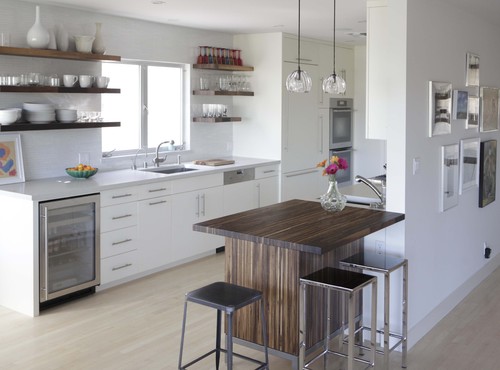
Dishwasher on the right in this case with sink in the middle and pull out trash on
the left.
If you have your own questions about what is correct, or not, shoot me an email and I will give you my take.
DECK TWO DOES KITCHEN ART
 Great to be back! Had a great time deep in the heart of the Catskills for my bro-in-law's 50th b-day. No cell phone connection but plenty of family connection so it was all good, even the 10,000 hours of planes, buses and automobiles. Anyway more on that later, much more! Today I'm dying to share Deck Two with you. Deck Two is a graffiti artist from Paris. Actually he's a human dynamo specializing in motion design, illustration, VFX (?) and especially LARGE graffiti. His latest work was completed just last month in New York, not on the street but, you guessed it, in a kitchen! Everyone knows how hot white kitchens are but this is a white kitchen plus. The work is called Global City and it features landmarks from all over the world. The remarkable thing about all this is he remained true scale in all his proportions drawing over walls and cabinets to cover the entire room. I guess whatever he does he tends to cover the whole thing. You know how I love to see art in the kitchen :) A big thanks to Vicki Perez for the heads up on Deck Two! Check out video below showing some of how it was done.
BALIZA, A NEW TWIST ON TRADITION
 I grew up in South Florida, never more than minutes away from the beach. The lighthouse is not only a symbol of tradition, where in days gone by it was a way shower and lifesaver for those at sea, but for me it also stands for Dad. My dad taught me how to swim, snorkel and generally love the ocean when I was a wee girl. As a Navy veteran who spent many days at sea, you could say he became a connoisseur of lighthouses. Today he makes them with his hands and if you're lucky enough to be a friend or relative you will have one gracing your yard with its soft illumination.
 Well apparently I'm not the only one thinking about lighthouses. On a trip to Portugal Judd Lord, Director of Industrial Design at Brizo, found the inspiration for the Baliza faucet. You guessed it, lighthouses! To him the lighthouse exemplifies all that is timeless and traditional. I love the idea of using a familiar object in a new and innovative way.
 Check out this video to see what Baliza is all about. Now I'm going to the beach!
ARCHITECT OF THE STARS STILL SHINES
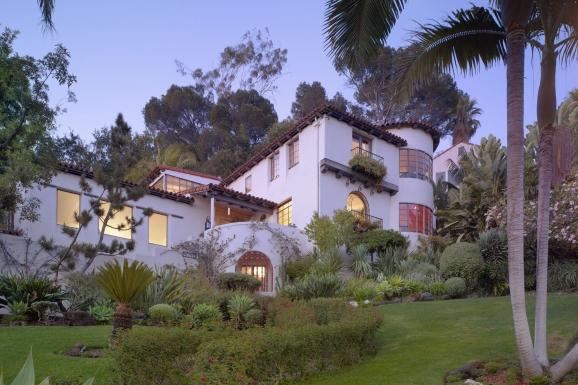 I admit it. I'm an NPR junkie. From Morning Edition to All Things Considered in the afternoon. I get my daily dose of news, arts and culture from Public Radio, mostly while I'm on the road. Once in a while it's really really good. That happened this week. I caught a story (here) about an architect who I'd never heard of, Paul R. Williams.
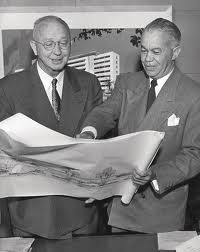 Perhaps if you live in, or have lived in, Los Angeles you have. His work is not only notable and impressive but his story is also inspiring and intriguing to say the least. Mr. Williams was black and he was an architect at a time when those two just did not go together. In fact he was the first member of the AIA (American Institute of Architects) west of the Mississippi. His grand daughter Karen Hudson has recently written a beautiful book, Paul R. Williams: Classic Hollywood Style , about his life and projects replete with foreword by reigning Hollywood design diva Kelly Wearstler.In one word Williams' style could be described as "diverse" or maybe "eclectic". In any case, his work appears in both commercial structures such as The Beverly Hills Hotel as well as in around 2000 homes in and around the Los Angeles area.His designs range from Spanish Colonial Revival and English Tudor to Mid-Century Modern. Known for spectacular entryways and grand curving staircases, the single element present in all his work was a unparalleled attention to detail, whether he was designing a Hollywood mansion or a housing project. Williams was born in Los Angeles in 1894, orphaned by the age of 4, he was a product of his inherent positive out look on life as well as a bit of luck. Although one could argue that he created much of that luck himself.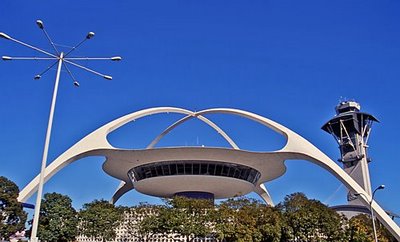
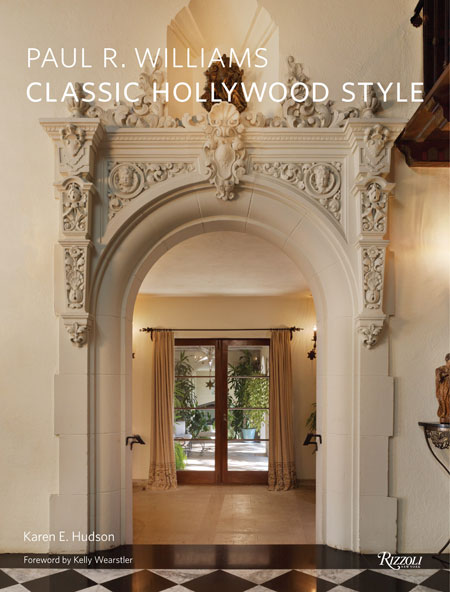
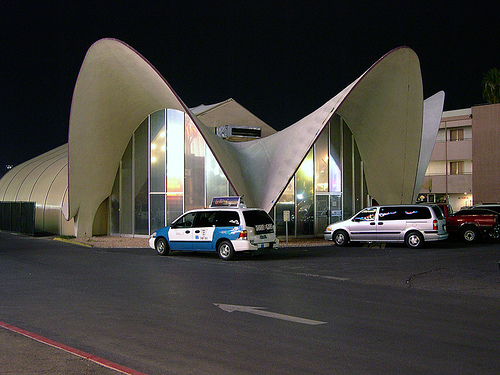 Williams is often referred to as the architect of the stars and he was. He designed homes for Lucille Ball and Desi Arnaz, Frank Sinatra and Cary Grant among others. The irony is that at this time, early to mid-century, he was prohibited by law from even staying overnight in many of the neighborhoods he worked in. In his mind, he felt his designs were opening the doors for future generations. Williams developed a handy knack for rendering upside down. This was so, being a black man, he could sit across rather than next to prospective clients! Despite these hardships he left his mark and he left his gifts as a legacy and reminder of how anything is possible.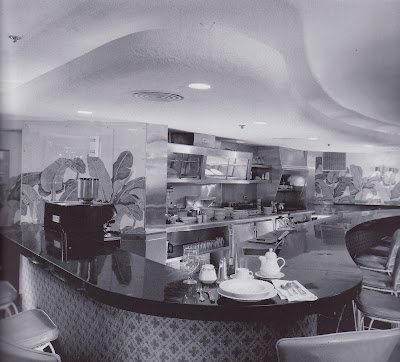
IT'S ALL CREATIVE
 One thing I discovered during my Bosch Blanco Bloggers' Retreat is that creativity cannot be contained. It spills out of the box in all sorts of interesting ways. It was a great experience. It's exciting and inspiring to learn about all the products, both the history and origins, as well as the very latest technologies. Most of all, I loved hearing about the design process and how these products come into being. I enjoyed interacting, not only with the creatives at Bosch and Blanco, but also with my peers. Whenever I could, I asked them about their typical days, how they work and what they do in their off time. What I found is that there is no off time for a creative. I should know that, right? I discovered an editor who loves to knit, a kitchen designer who's passion is ballroom dancing and a much admired kitchen blogger who loves to photograph roses. She confesses to having literally thousands of rose photos lurking in her hard drive! The creative process is also a big part of what I learned about during our two days at the BSH Design Center in Irvine, California.
 The process of developing new products begins with colored pencils and adventurous minds. The team at Bosch endeavors to achieve just the right combination of precision German engineering and the latest technology to address the needs of the consumer.
 Sometimes these needs are apparent but often they can be situations (observed and researched) that we may not even be aware of! This is what makes the folks at Blanco and Bosch such a great team. They have a similar approach which understands that everything's connected in our world and it all informs what we need to function comfortably and efficiently in our homes. Kudos to them and thanks for the memories!